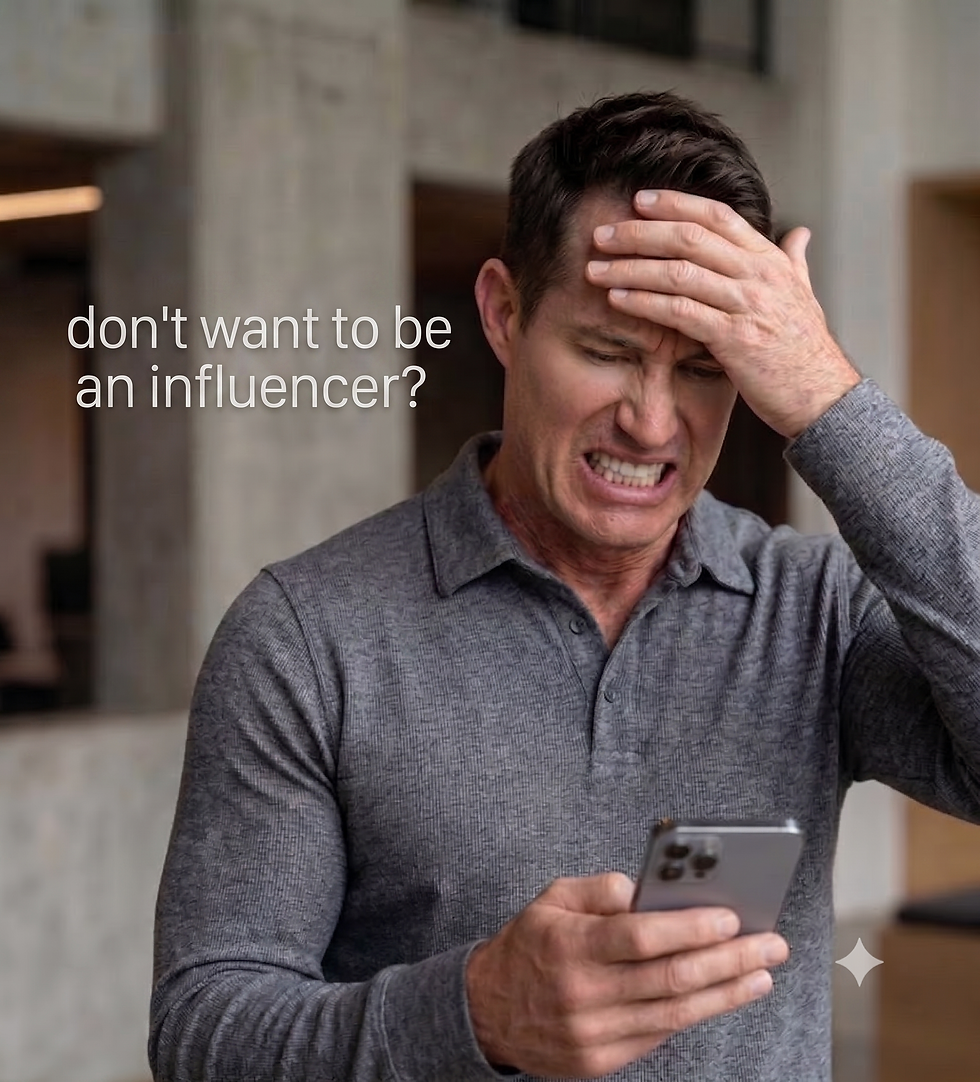
Hesitant to post because you’re worried you’ll come off like a wannabe influencer?

Most people have heard they “need a personal brand.” Usually, that advice comes wrapped in images of someone recording videos in their car or posting nonstop about their daily routine. If your reaction is that this isn’t you and you don’t have time for it, you’re not wrong. So you ignore it—and meanwhile, someone no more skilled than you keeps getting the call.
What often gets missed is this: a personal brand isn’t a performance. It’s simply your professional reputation made visible to people who haven’t worked with you yet. The clients who already know you don’t need it. This is about the ones who don’t.
Influencers vs. operators
Influencers build an audience as the product. Their followers drive attention, and attention drives income. Their job is to constantly create and stay visible.
That’s not your job.
For you, the audience isn’t the product—it’s a focused group of people who do business with you. You don’t need to reach hundreds of thousands of strangers. You need to stay visible to the right few hundred or thousand people in your space. That’s a much smaller, more manageable goal, and it doesn’t require a full-time commitment. A couple of hours a week is enough.
Focus beats everywhere
Trying to be active on every platform is the fastest way to stall out. Choose one place where your customers and referral partners already spend time and commit to it.
For many business owners, especially those working with other businesses, that place is LinkedIn. Your personal activity there gives your company page something to build on and amplify. Until one platform is working, the rest can wait. That doesn't mean you shouldn't also post on them, it just means your energy and interaction should be limited to one or maybe two platforms. AI can help with this in a dramatic way.
Just as important, choose what you want to be known for. Not everything you do—just a specific area where you’re particularly strong and where your customers need help.
Think of the roofer known for getting insurance claims approved, or the bookkeeper known for cleaning up long-standing financial messes. Narrowing your focus doesn’t limit your business—it makes you easier to find and remember. When you try to be known for everything, you end up known for nothing.
Show the work, don’t invent it
This is where the process becomes sustainable. You’re not creating content from scratch—you’re capturing the work you already do.
A customer asks a thoughtful question—your answer becomes a post. You fix a common problem—share the before and after. You make a difficult decision and explain it to your team—that explanation becomes content.
The material is already part of your day. The only extra step is writing it down in clear, simple language for one person to read.
The people who burn out are the ones who treat this like a separate production job. The ones who stick with it treat it as documenting the work they were already doing.
A pace you can maintain
Posting every day for a short burst and then disappearing doesn’t build anything. Showing up once a week, consistently, does.
Your audience isn’t tracking how often you post—they’re forming a general impression over time. What sticks is that you’re present, steady, and engaged in your work. That impression builds trust.
Set a pace that still holds when things get busy, because they will. One short, useful post each week—whether it’s Sunday or Tuesday—is enough to create momentum and keep it going.
What progress actually looks like
You won’t see the impact in follower counts, and that’s not where you should be looking anyway. The real signal shows up in conversations.
A prospect mentions they’ve been reading what you share. A referral partner says they sent someone your way because you clearly understand the work. A candidate reaches out and says they’ve been following along for a while.
That’s the return. Not a large audience, but the right people arriving with trust already built. You didn’t become an influencer—you became the person people think of when they need what you do. The work was always there; now it’s visible to the people who matter.


